Meet the Soloists

Jennifer Check

Jennifer Check

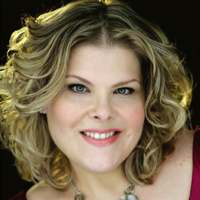
Celebrated by the New York Times for her “rare talent that can send chills down a listener’s spine even in familiar music,” Jennifer Check returns to Verdi’s Requiem in the hallmark Defiant Requiem presentation with the Detroit Symphony Orchestra and Chicago Philharmonic. She also returns to the Metropolitan Opera roster as the High Priestess in Aida and for its production of Saariaho’s L’amour de loin and joins the Lyric Opera of Chicago roster for Norma. Last season, she returned to Utah Opera for the title role of Aida, her first performances of Desdemona in Otello with Berks Opera, and returned to the Metropolitan Opera for Anna Bolena and Maria Stuarda. On the concert stage she joined the Aspen Music Festival for Saariaho’s Cinq reflets. She recently debuted three other Verdi titles: Macbeth (Nancy, Palm Beach), Il trovatore (Utah Opera), and Don Carlos (Caramoor) and sang her first Ariadne auf Naxos (Toulon). Other recent performances include Don Giovanni (Metropolitan Opera), Muhly’s Dark Sisters (Gotham Chamber Opera, Opera Philadelphia), Norma (Palm Beach, Philadelphia), Elektra (London, Tokyo, Detroit), Iphigénie en Tauride (Valencia), Dialogues des Carmélites (Caramoor, Austin), and The Legend of the Invisible City of Kitezh (Amsterdam).

Carla Jablonski

Carla Jablonski

Hailed as a “vibrant stage personality” matched with a “sizable creamy mezzo,” Carla Jablonski’s vocal versatility has captivated audiences across the globe. Ms. Jablonski was most recently praised for inhabiting the title role in Dido and Aeneas with “impressive sophistication.” She joined The Metropolitan Opera for Die Meistersinger von Nürnberg and a new production of Verdi's Otello. At Florida Grand Opera she sang Dorabella in Cosi fan tutte followed by performances of the Secretary in The Consul. Past seasons include various roles with Wolf Trap Opera, Opera Santa Barbara, Central City Opera, and Chautauqua. Equally at home on the concert stage and an advocate of new music, Ms. Jablonski made her Lincoln Center debut at Alice Tully Hall singing Five Songs by Charles Ives arranged for orchestra by John Adams, followed by her Carnegie Hall debut as the alto soloist in Handel’s Messiah. She also has sung as a featured soloist with the Saint Paul Chamber Orchestra, New York Festival of Song, Caramoor International Music Festival, and American Opera Projects, among others. Upcoming, Ms. Jablonski is featured on a tango album of specially arranged and newly commissioned Piazzolla songs in collaboration with The Neave Trio. She holds a Master of Music from The Juilliard School and a Bachelor of Music from Manhattan School of Music and is a proud recipient of a Drama Desk Award.
Jonathan Tetelman

Jonathan Tetelman

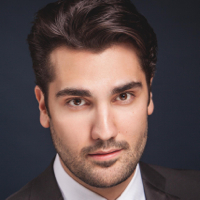
Praised by Opera News for his “galvanizing presence” tenor Jonathan Tetelman joins the Milan Festival Orchestra in Lake Como, Italy for his first performances of Verdi’s Requiem, the Orchestra Now for Elgar’s Dream of Gerontius, Opera Company of Middlebury for Luigi in Il Tabarro, and New England Symphonic Ensemble for Mozart’s Coronation Mass. He also joins the St. George’s Choral Society for performances of Dvorak’s Stabat Mater, the Greenwich Choral Society for Bizet’s Te Deum and Puccini’s Messa di Gloria, and Gulf Shore Opera for concert performances including selections from La Traviata, La boheme, and Rigoletto. Next season, the tenor joins the roster of the Metropolitan Opera and sings his first performances of Duca in Rigoletto with the Berkshires Opera Festival. Last season, he joined the Martina Arroyo Foundation as Eisenstein in Die Fledermaus and Teatro Grattacielo covering Agamemnone in Gnecchi’s Cassandra. As a young artist with Opera North, Mr. Tetelman sang Steven Sankey in Weil’s Street Scene, Freddy Eynsford-Hill in My Fair Lady, and Alfredo in La Traviata. Additionally, he joined the New York Opera Exchange for performances of Alfredo in La Traviata, and attended the International Vocal Arts Institute in Blacksburg, Virginia performing as Elder Gleaton along with direction by composer Carlise Floyd, in his masterpiece, Susannah.

Matthew Anchel

Matthew Anchel

Bass Matthew Anchel, called "a voice to watch" by the Wall Street Journal and praised for his “magnetic, deep voice” by the New York Times, was a Grand Finalist in the 2013 Metropolitan Opera National Council Auditions. This season he will sing the role of Sparafucile with Anchorage Opera; the bass solos in the U.S premiere of The Hyland Mass: A Prayer for Unity and Diversity by Joseph Vella with New York Choral Society at St. Patrick’s Church in New York City; and the role of Sun Tze in a workshop performance of REV. 23 with the Prototype Festival. He will make his Carnegie Hall debut singing Haydn’s Mass in Time of War and join The Metropolitan Opera for their productions of The Magic Flute, Idomeneo, and Der Rosenkavalier. Next season he will return to the The Metropolitan Opera for their productions of The Exterminating Angel and Cendrillon and sing Sarastro in The Magic Flute with St. Petersburg Opera. Recent engagements include Handel’s Messiah with the Annapolis Chorale, B Minor Mass with Canterbury Choral Society, Marpa in Mila, Great Sorcerer with American Lyric Theater, Zuniga in Carmen with the Savannah Voice Festival, and singing #8 in Transformations with the Merola Opera Program. Past highlights include two seasons covering in five productions with The Metropolitan Opera, Sarastro in The Magic Flute with Opera Theatre of St. Louis, a season with Oper Leipzig, performing in eight productions, Alidoro in La Cenerentola with Knoxville Opera, Ferrando in Il Trovatore and The Bonze in Madama Butterfly with Opera San Jose, and Don Alfonso in Lucrezia Borgia with Loft Opera. Mr. Anchel was a Young Artist with LA Opera, Opera Theatre of St. Louis, and Caramoor. He has won awards from The George London Foundation, Loren L. Zachary Foundation, Sullivan Foundation, Fritz and Lavinia Jensen Foundation, Palm Beach Vocal Competition, and Opera Index.

A 200th-anniversary Podcast

Celebrating 200 Years of Song
Naomi Lewin and St. George's Choral Society

“There are people that stick with this choir. They keep coming back, it keeps growing, and I think it’s fascinating to be in a group that has been in existence for 200 years.”

So begins our new podcast, produced and narrated by Naomi Lewin, the former host of weekday afternoon music on WQXR, and of the podcast Conducting Business.

Listen to learn about the history of the group, hear from current members, and enjoy music from St. George’s Choral Society performances. 

Antonin Dvorak, Harry T. Burleigh, and St. George’s Choral Society

In 1891, St. George’s Choral Society performed Antonin Dvořak’s Stabat Mater for the first time, just 14 years after its completion. We will perform the piece again on April 30, 2017 to celebrate our 200th anniversary and historic connection to the composer. In February 1892, seven months before Dvořák arrived in America, the Choral Society gave the American premiere of his Requiem mass.

Read more

Notes on Our Program

ANDREW SPINA © 2016

ANDREW SPINA © 2016

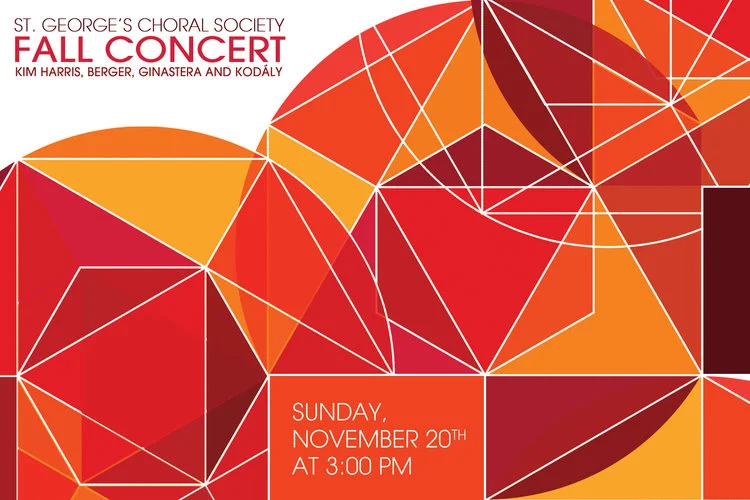
Our first concert of the season is this Sunday, November 20, at 3 pm at the Church of the Incarnation, 209 Madison Avenue at 35th St. Tickets are $30 online and at the door.

To get you in the mood for the music, enjoy our program notes:

“When We Were” is a song poem for choir, organ, cello and soprano. It is in three parts: "Then," "Now," and "When.” Each part consists of distinct roles: the nostalgic chorale reminisces memories; a solo cello emulates the voice of the present reality, and conscience; the organ records the passing of time; and a solo soprano invokes innocence and hope.

The text is driven by fragments from a poem that my grandfather, Dr. Dong Whan Lee, wrote shortly after the Korean War in ancient Chinese calligraphy—one in a collection of 86 poems translated and published in Korean titled “Field of Tea/Snowy Mountain/Spring Mountain.” This text depicts the devastation and displacement that war leaves behind, time unwarranted. These fragments are sung in Korean, written out phonetically in English for the choir.

In the eight minutes of the piece, the music pushes and pulls in and out of the feeling of the present and past, eventually letting go completely. This is depicted in the ascending line of the cello harmonics, which disappear on a high “E” tremolo, closing the piece.

The chorus holds onto the key of D minor while the organ counterpoints a dissonant B minor stubbornly against it. The cello lives in a sound bubble of five notes C, D, E, F# and Bb. Much like Messiaen, inspiration was found in the birds that would sing me awake at dawn. A rhythmic notation unveiled itself, working its way into the solo cello. In the “Now” middle section, the choir blows through organ pipes and sings articulated percussive sounds which collectively mimic a sense of the rustling of the leaves and wind blowing through the trees.

One of the many discoveries in writing this piece was that my grandmother was a church organist. This is how my grandfather met her. My mother, Moon Hie, the youngest of six children, grew up to be a soprano and sang in church when my sister, brother, and I were growing up.

I am especially grateful to Christine Kim, my beautiful and talented sister, who is playing this premiere performance on solo cello at the invitation of Artistic Director Dr. Matthew Lewis.

Unintentionally, this has become a deeply personal piece. My hope is that it might resonate with you in a personal way too, providing needed solace, strength, and peace—a respect for the fragility of life.

My dear friend Joanne Cheung, who took on the task of translating this poem, found in reaching out to her grandfather for guidance in translating, that he had fought in the Korean War. He currently resides in Los Angeles where my grandfather also lived.      Pauline Kim Harris


Argentinian composer Alberto Evartisto Ginastera (1916-1983) is considered one of the most important composers of the Americas. He wrote Psalm 150 in 1938 and the world premiere was in Buenos Aires in 1945. The North American premiere was given in 1968 by the Philadelphia Orchestra, Eugene Ormandy conducting. This colorful work employs several interesting composition techniques, most notably polytonality, while some sections refer to Renaissance polyphony. A serene Alleluia grows into an outburst of joy, concluding the work.

Jean Berger (1909-2002) is known primarily as a pianist and composer of choral music. He was born Arthur Scholssberg into a German Jewish family. He moved to Paris in 1933, after the Nazis took power, changing his name to Jean Berger. He eventually moved to the United States where he established himself as a college educator. His Brazilian Psalm is an extended a cappella work, rarely performed in its entirety. An interesting mix of harmonic styles, it eventually settles into an Alleluia which concludes the piece.

The Missa Brevis of Zoltán Kodály is a tour-de-force—colorful, expressive, exuberant, and energetic, this is a masterpiece of the choral literature. Kodály (1882-1967) was a Hungarian composer and ethnomusicologist. In addition to his many compositions, he is known as the founder of the Kodály Method, an approach to music education. The original version of the Missa Brevis is the one heard today, scored for organ, chorus, and soloists. He later orchestrated the piece. Kodály remained in Hungary during the Nazi occupation. Amid the chaos of war, during which the Red Army eventually overcame the German forces in Budapest, he took refuge in the Opera House. During repeated bombings of the city, he finished a composition he had started years earlier: this very Mass setting. Amazing that in the middle of such chaos, such beauty emerged! 

Harry Huff, 1952–2016

We are saddened to report the sudden passing of Harry Huff, who served as Artistic Director of St. George's Choral Society from 2000–2004. He enjoyed a long and accomplished career as a conductor, keyboardist, and organist.

“Harry Huff was a talented musician and a dynamic, engaging, and fun-loving person,” said Artistic Director Matthew Lewis. “His energy and humor was evident to anyone around him. Harry and I enjoyed many years of friendshiptrips, parties, dinners, etc. I'm so fortunate to have known him, and St. George's Choral Society is blessed to have been part of his wonderful musical leadership.”

Read a full obituary>>

Continued Support from the New York City Department of Cultural Affairs

We are thrilled to announce that once again we have received a Cultural Development Fund grant from the New York City Department of Cultural Affairs (DCA).

This year, the DCA awarded us $6,160 in support of our 2016–2017 season, including our Fall and Spring concerts and Summer Choral Festival. This grant amount includes funds from the Mayor's Office, added to the Cultural Development Fund Programs budget for fiscal year 2017.

We are grateful for the DCA's support as we enter our 200th season.

Writing "When We Were"

St. George’s Choral Society will debut a commissioned work by violinist-composer Pauline Kim Harris at our fall concert on November 20. The composer attended a recent rehearsal to speak to the choir about her new piece, which is her fourth opus.

Pauline Kim Harris. Photo: Eli Akerstein.

Pauline Kim Harris. Photo: Eli Akerstein.

"When [Artistic Director] Matthew [Lewis] suggested the idea” of commissioning a work, “there were so many things I wanted to do," she said.

Eventually, Kim Harris used her recent discovery that her grandfather, Dr. Dong Whan Lee, was a poet as inspiration for "When We Were," an 8-minute piece for choir, organ, cello, and soprano with text in Korean. Words are written phonetically in English for singers.

“When We Were,” said Kim Harris, combines the "unusual and familiar" in expressing "how we relate to each other" and yearn for the "things that help us stick together and stay strong."

After the Korean War, Kim Harris’ grandfather relocated to Seoul, which was not then the cosmopolitan city it is today. In this new and unfamiliar place, he and so many others had to start over. "In hard times," Kim Harris said, "we find ways to reconnect, rebuild, and remember that we have each other."

"The tone of the poem predominantly directed the composition of the piece, rather than the actual words themselves," said Kim Harris. "Challenging, because the words are not necessarily translatable. One has to capture the essence of their meaning."

"When We Were" uses fragments of the poem, originally written in ancient Chinese calligraphy by Dr. Lee, nicknamed "Bamboo." The piece is in three parts: "Then," "Now," and "When." Each group has a role: the nostalgic chorale, reminiscent of the past; a cello solo (to be performed by Christine Kim) representing the reality of the present; the organ stating the passing of time; and a soprano solo evoking memory and transcendence.

"I’m excited to hear the piece come alive," Kim Harris said. And we can’t wait to perform it in November.

Every Night I Walk Home Singing

Rehearsals for our Fall 2016 concert began this past Wednesday, September 7. Our new and returning members arrived excited to learn the repertoire for our November 20 concert: Berger’s Brazilian Psalm (to be sung by auditioned chamber singers); Ginastera’s Psalm 150; Kodály’s Missa Brevis; and “When We Were,” a commissioned work by Pauline Kim Harris for choir, organ, cello, and soprano.

Artistic Director Matthew Lewis and the choir at the first rehearsal of the 2016–2017 season.

I asked several members what they enjoy about singing with St. George’s Choral Society. Here are their replies:

“What I like the most about singing with St. George's Choral Society: [Artistic Director] Matthew [Lewis] and my fellow soprano ones! He never gives up on us and is always challenging us to be better, and they understand that the struggle is real but the result is sweeter.” – Blessing Agunwamba, Soprano

“I've been in St. George's Choral Society since 2008, and I treasure my time singing with the group. Taking my mind off of work and singing beautiful music every week with wonderful people is really a pleasure. I look forward to every rehearsal!” – Zac Rider, Bass

“I am so happy to be back after a taking a break last season! Singing with St. George’s Choral Society is a pure joy. The music is beautiful and well chosen and it's exciting to work with professionals, like Matthew and our ringers. But the best parts are that our choir has its own eccentric character, our director has a hilarious sense of humor, and we have fun learning complex pieces and lifting our voices together. Choir practice has a way of putting every thing else in perspective. Every night I walk home singing.” – Cara Hoffman, Soprano

It isn’t too late to join these members and sing with the choir. Contact info@stgeorgeschoralsociety.org to schedule an audition.

If you can’t sing with us this fall, we hope to see you at our first concert of the season on November 20 at 3 pm at the Church of the Incarnation, 209 Madison Avenue at 35th Street.